Pages

Thursday, August 15, 2019

Madeline Miller, THE SONG OF ACHILLES

I liked this book for many of the same reasons I loved Miller's more recent CIRCE. It's sort of a warp-to-weft novel, with the story of the Iliad's hero being told not by Achilles but by his sidekick and (in this book) lover Patroclos. The language is lovely and poetic; the pace quick. I thought the homosocial/homosexual bend is handled beautifully. Miller convincingly elaborates and elevates the psychology of these two men during the events of the ten-year war, so we understand why the theft of Briseis, for example, matters so deeply to Achilles, and as a result, Briseis becomes a rounder, more complex characters as well.

A few favorite lines that I read aloud just for the pleasure of hearing them in my ear. (And I know this doesn't do them justice; part of why they strike me is how they appear in relation to their context. But still, I want to share!)

I was listening to the drumbeat of my own impatient heart. "Hurry, I remember saying."

The gray sand, the gray sky, and my mouth, parched and bare.

I sank into the trailing thoughts of dreams.

Cleopatra, Patroclus. Her name built from the same pieces as mine, only reversed.

No spoilers but my heart broke a bit at the end. Would definitely recommend!

Thursday, August 8, 2019

Fiona Davis, THE MASTERPIECE

I had high hopes for this book, as I love historical novels, especially those featuring strong women protagonists, and this split narrative, set in 1929 and 1974, had two! I truly appreciated the author's research, for the book contained interesting historical details about Grand Central and the art school that was located there. But I found the intertwining of the two plots forced and rushed at the end, for it felt to me that Virginia's work to uncover the truth about Clara--which might have been an opportunity to reveal how Virginia's character had evolved--occurred almost entirely offstage and is explained to the reader through the rather clumsy device of Virginia's monologue to a rapt audience. I felt as though the extramarital sex/romance plots were used to stand in for the psychological daring that I was never convinced the characters possessed. I was also repeatedly pulled out of the narrative by phrases that felt anachronistic for the 1920s and 1970s, at least to me--phrases like "freaking out" and "Virginia didn't care that she was coming off as a train geek," "looking forward to catching up" and "we're not a good fit." I see that many, many people loved this book ("Riveting, sophisticated and utterly sublime" from Tasha Alexander); I guess it just wasn't for me.

Tuesday, August 6, 2019

Anthony Horowitz, MAGPIE MURDERS, A NOVEL

Just finished and enjoyed this mystery by Anthony Horowitz, who created the TV series FOYLE'S WAR, which is one of my all-time favorites. This novel is literary, meta- and clever. The main character is an editor named Susan Ryeland, who has received her client Alan Conway's last mystery. He is dying of cancer, and he has written a novel that features an inspector named Atticus Pund, who is (also) dying of cancer. The entire mystery, entitled MAGPIE MURDERS, the last in a series of nine, is included inside this book, so there is a sort of Russian doll structure to it. The themes are broad: the publishing industry, the creative process, the line between autobiography and fiction, human curiosity, what authors owe readers, and what we owe the people we love. It's also wry and playful. I found myself scribble "Ha!" in the margins many times. Here's a typical passage that made me giggle:

"Haven't the public had enough of murder?" I asked.

"You're joking," [Redmond, a TV producer replied]. "Inspector Morse, Taggart, Lewis, Foyle's War, Endeavour, ... Broadchurch ... --British TV would disappear into a dot on the screen without murder. They're even bumping people off in the soap operas."

Would recommend.


Friday, June 14, 2019

Andrew Gross, BUTTON MAN

This is both an historical mystery and a pull-himself-up-by-his-bootstraps coming-of-age novel, set in early 1900s New York City. It is based on the author's grandfather's true story, about growing up poor on the Lower East Side and making his way in the garment industry. New York City feels terrifying and lawless, with no higher authority to whom anyone can appeal; it's only gangs and mobsters, until Dewey comes along. I found the story compelling, the pacing quick, the setting immersive, the plot turns unexpected. The story has heart. Enjoyed it very much!

Thursday, May 30, 2019

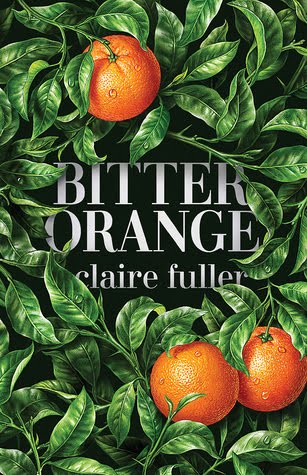
Claire Fuller, BITTER ORANGE


First off: this is NOT a tear-through-it page-turner. For one, the writing is too darn good. I found myself rereading phrases and passages because they were so evocative or so perfectly tuned to capture a character's internal state. For another, the "action" is minimal. The narrator, an elderly Frances, is immobile in bed, and she describes both her painful present and a slice of remembered past--what seemed to have the makings of an idyllic summer in the 1960s. Invited to make a study of architectural curiosities on a tumbledown English manor estate, Frances takes up residence at Lytton, which is also home to a (ostensibly married) couple who seem to be in love but clearly have a past imbued with pain. (I found myself thinking of *Sophie's Choice*.) For the first time in her nearly-40-year-old life, Frances is not merely an observer. Together, Peter, Cara and Frances share picnics and dinners and explore the manor house. But from early on, the reader senses that the three of them are going to destroy what they have. The tragedy is not writ large or explosively. But it is deeply, painfully heartbreaking, and I wasn't surprised to see other reviewers mentioning DuMaurier's *Rebecca*.

Monday, April 29, 2019

Madeline Miller, CIRCE

I truly enjoyed every minute of this book. It's what I call a "warp/weft" novel because in the craft of weaving, the warp is in one direction, weft is in the other.

In THE ODYSSEY, Circe appears as a secondary character, present in 2-1/2 books out of 12. There, she is a sorceress who lives on an island alone and turns Odysseus's sailors into pigs as punishment when they behave badly, gobbling her food and eying her lasciviously. After convincing her to release the pigs from their spell, Odysseus remains with Circe for a while on his ten-year journey home; while she was memorable (to me, at least) she is merely one of many characters he meets along the way.

In Miller's book, Odysseus is relegated to a secondary character. This is similar in project to WIDE SARGASSO SEA, a postcolonial novel that flipped JANE EYRE sideways, putting the alleged madwoman in the attic Bertha Mason's character at the center instead of the periphery; also Peter Carey's novel JACK MAGGS, which did something similar for Magwitch from GREAT EXPECTATIONS. In telling a secondary character's story, these novels render them as more sympathetic than in the original; often there is a not-so-subtle nudge to us to consider where our sympathies should lie and how perspective and narration shape what we think we know. (Neither of those books is overly didactic, I don't meant that. But they do nudge and provoke thought, in a productive way.) Similarly,  CIRCE flips a primary narrative sideways--and Miller crafts a narrative that is evocative and innovative and a wonderful read. This novel is at once a coming-of-age story and a love story ... and I haven't met anyone yet who hasn't enjoyed it. Highly recommend.

Sunday, March 24, 2019

Joshilyn Jackson, A GROWN-UP KIND OF PRETTY


I loved this novel. It's beautifully written, atmospheric, and full of heart without being predictable or sentimental. It is also unusual because it's focalized through three different characters--two in first-person and one in third-person, a feat that I think is hard to pull off convincingly. Here, it works. Set in the South in present-day, it concerns three women--Ginny age 45, Liza age 30, and Mosey age 15. When a willow tree is dug up to build a pool for physical therapy to help the Liza recover from what looks like a stroke, a box is discovered that, when opened, reveals a tragedy that's been kept hidden for fifteen years. The novel doesn't slot neatly into one or two genres: it's a mystery, a love story, a coming-of-age story ... and it's the story of three women at once, all fumbling and loving and longing. Yet there's a wry humor to certain passages that keeps it from becoming over-wrought. The author has several other books (and one forthcoming in July, NEVER HAVE I EVER) and I'm not sure how the heck it took me this long to find her. Reminds me a bit of early Kingsolver and Laurie Colwin. Would recommend.