
Friday, June 14, 2019
Andrew Gross, BUTTON MAN


Thursday, May 30, 2019
Claire Fuller, BITTER ORANGE
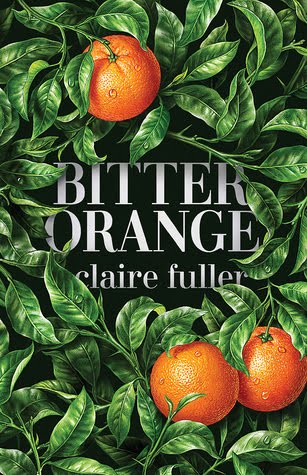
First off: this is NOT a tear-through-it page-turner. For one, the writing is too darn good. I found myself rereading phrases and passages because they were so evocative or so perfectly tuned to capture a character's internal state. For another, the "action" is minimal. The narrator, an elderly Frances, is immobile in bed, and she describes both her painful present and a slice of remembered past--what seemed to have the makings of an idyllic summer in the 1960s. Invited to make a study of architectural curiosities on a tumbledown English manor estate, Frances takes up residence at Lytton, which is also home to a (ostensibly married) couple who seem to be in love but clearly have a past imbued with pain. (I found myself thinking of *Sophie's Choice*.) For the first time in her nearly-40-year-old life, Frances is not merely an observer. Together, Peter, Cara and Frances share picnics and dinners and explore the manor house. But from early on, the reader senses that the three of them are going to destroy what they have. The tragedy is not writ large or explosively. But it is deeply, painfully heartbreaking, and I wasn't surprised to see other reviewers mentioning DuMaurier's *Rebecca*.
Monday, April 29, 2019
Madeline Miller, CIRCE

In THE ODYSSEY, Circe appears as a secondary character, present in 2-1/2 books out of 12. There, she is a sorceress who lives on an island alone and turns Odysseus's sailors into pigs as punishment when they behave badly, gobbling her food and eying her lasciviously. After convincing her to release the pigs from their spell, Odysseus remains with Circe for a while on his ten-year journey home; while she was memorable (to me, at least) she is merely one of many characters he meets along the way.
In Miller's book, Odysseus is relegated to a secondary character. This is similar in project to WIDE SARGASSO SEA, a postcolonial novel that flipped JANE EYRE sideways, putting the alleged madwoman in the attic Bertha Mason's character at the center instead of the periphery; also Peter Carey's novel JACK MAGGS, which did something similar for Magwitch from GREAT EXPECTATIONS. In telling a secondary character's story, these novels render them as more sympathetic than in the original; often there is a not-so-subtle nudge to us to consider where our sympathies should lie and how perspective and narration shape what we think we know. (Neither of those books is overly didactic, I don't meant that. But they do nudge and provoke thought, in a productive way.) Similarly, CIRCE flips a primary narrative sideways--and Miller crafts a narrative that is evocative and innovative and a wonderful read. This novel is at once a coming-of-age story and a love story ... and I haven't met anyone yet who hasn't enjoyed it. Highly recommend.
Sunday, March 24, 2019
Joshilyn Jackson, A GROWN-UP KIND OF PRETTY

I loved this novel. It's beautifully written, atmospheric, and full of heart without being predictable or sentimental. It is also unusual because it's focalized through three different characters--two in first-person and one in third-person, a feat that I think is hard to pull off convincingly. Here, it works. Set in the South in present-day, it concerns three women--Ginny age 45, Liza age 30, and Mosey age 15. When a willow tree is dug up to build a pool for physical therapy to help the Liza recover from what looks like a stroke, a box is discovered that, when opened, reveals a tragedy that's been kept hidden for fifteen years. The novel doesn't slot neatly into one or two genres: it's a mystery, a love story, a coming-of-age story ... and it's the story of three women at once, all fumbling and loving and longing. Yet there's a wry humor to certain passages that keeps it from becoming over-wrought. The author has several other books (and one forthcoming in July, NEVER HAVE I EVER) and I'm not sure how the heck it took me this long to find her. Reminds me a bit of early Kingsolver and Laurie Colwin. Would recommend.
Thursday, February 28, 2019
Michael P Nichols, THE LOST ART OF LISTENING: HOW LEARNING TO LISTEN CAN IMPROVE RELATIONSHIPS

"It isn't that we're bad listeners; it's our hidden emotional agendas that crowd out understanding and concern. When we clear away automatic emotional reactions--criticism, fear, hurt--we get to compassion, curiosity, and tenderness."
"One reason people doubt that we understand how they feel is that we fail to let them know we heard them. Silence is ambiguous. ... The point isn't to convey that you understand but to convey that you're trying to."
The author provides plenty of anecdotes from his practice and his own family life for illustration, and often provides bits of humor, which acknowledges that we're all trying and flawed. I've already implemented one change. When my daughter called to tell me about a situation she's dealing with at college, I know not to jump in and offer a quick fix; but this time, instead of trying to sense what she wanted from me, I asked outright and openly: "Are you sharing this to let me know what's going on (which I appreciate) or would you like a suggestion?"
Some of the book retraces principles we find in the more "pop" psychology books, about inquiring first rather than jumping to making judgments, but even that is pretty well theorized without getting laden with PhD jargon.
My one gripe with this book, and it has to do with the assumptions underpinning its project, is that Nichols begins: "Nothing hurts more than the sense that the people we care about aren't really listening. We never outgrow the need to have our feelings known." That is absolutely true, so far as it goes. But I think he doesn't quite acknowledge that we also need to have other people's stories told to us. We grow with those, and they are a gift that I (at least) crave. Otherwise, why would we read books, for example? This question is sort of outside the realm of the book; I just felt he might have acknowledged that need. I do think that in this hurried world, listening is undervalued and underachieved; there are a lot of people who don't get enough listening, who don't have enough of that sense that they matter. So this book addresses a prevalent and painful issue.
Thursday, January 10, 2019
Tana French, THE WITCH ELM

I will always read anything by Tana French. The emotional tension she creates among her characters, and between the protagonist and the reader, is astonishing. I don't know anyone else who does it as well, for me. But the ending of this fell a bit flat for me--the sudden revelations by the cousins felt a bit unearned; and, frankly, the protagonists final desperate acts felt somewhat implausible. Still, a great read. But it's not going to dislodge French's FAITHFUL PLACE from my favorite top 5 mysteries ever. :)
Zora Neale Hurston, THEIR EYES WERE WATCHING GOD
Such a powerful book. I think the first time I read it I was 15 ... and I'm not sure I understood the nuances and layers and even the language. But this time, my heart just ached ... and that hurricane scene just kills me.
Subscribe to:
Posts (Atom)
